Webinar | Expanding Access to HIV Treatment
for Children and Adolescents in Africa
Presenter
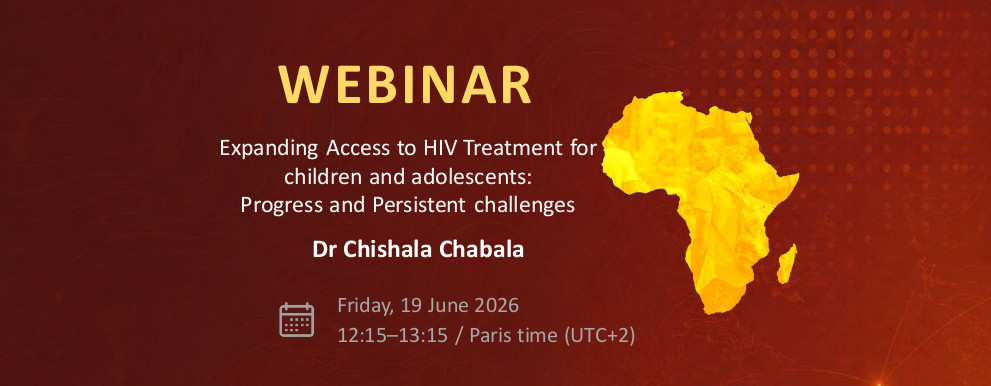
Dr. Chishala Chabala
Pédiatre au CHU de Lusaka
School of Medicine, University of Zambia
Title
Expanding Access to HIV Treatment for children and adolescents: Progress and Persistent challenges
Details
📅 Friday, 19 June 2026
🕐 12:15–13:15 CEST / Paris time (UTC+2)
📍 Amphi 10, Carreire Campus – University of Bordeaux
💻 In person and online
🔗 Zoom Link: https://u-bordeaux-fr.zoom.us/j/86746822563
Open to all – Seminar in English.
Bio
Chishala Chabala is a Lecturer and Consultant Paediatrician at the University of Zambia, School of Medicine and the University Teaching Hospital in Lusaka, Zambia, where he teaches, conducts research, and provides clinical care.
He leads a clinical research group that focuses on children with tuberculosis, HIV, and pneumonia and has been an investigator in several international clinical trials, including those for children living with HIV (CHAPAS-3, -4, and Empirical trials).
He is the current Vice-Chair of the Child and Adolescent TB Working Group of the STOP TB Partnership, administered by the WHO.
More information on Dr Chishala Chabala
Bio
40 million people were living with HIV, with over two thirds of these residing in Africa, predominantly in Southern Africa. Globally, progress has been made towards universal access to antiretroviral therapy and the reduction in transmission from a mother living with HIV to her child.
However, antiretroviral treatment coverage among children under 15 years living with HIV remains low, with just over half receiving treatment of the 1.4 million children with HIV compared to 78% in adults.
Evidence shows that early initiation of antiretroviral therapy is lifesaving, yet coverage of these critical interventions including access to HIV testing, treatment and viral suppression remain inadequate, particularly in Africa, where >90% of children requiring HIV treatment live.
This talk will highlight progress in improving access to simplified antiretroviral regimens for children, as well as the ongoing challenges and efforts to bridge treatment access gaps and achieve global HIV treatment goals.